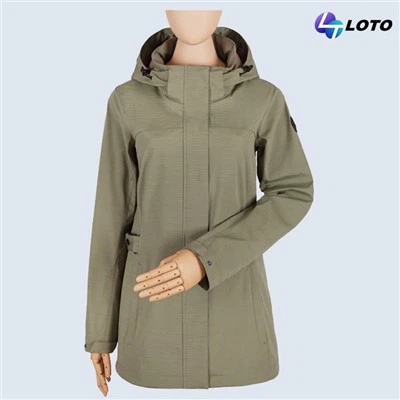
Outdoor clothing has become a crucial component for individuals who participate in outdoor activities like camping, hiking, or mountaineering. In order to provide adequate protection against harsh weather conditions, outdoor clothing is typically divided into three layers from the inside to the outside. These three layers include the perspiration layer, the thermal layer, and the waterproof and windproof layer, commonly known as the "shell". The shell layer is further divided into two categories: the hard shell and the soft shell.
The hard shell is also known as the outdoor jacket, and it is used as the outermost layer in outdoor activities to protect against harsh climatic factors such as wind, rain, and snow. It is made of chemical fiber and is only a layer of "thin skin" without any thermal insulation. However, it has good isolation and windproof performance, which can prevent or slow down the air flow between the hard shell and the body, and avoid the generation of air-cooling effect. The environments where hard shells are required are usually harsh, and the temperature in some environments is extremely low, which requires high thermal insulation requirements for clothing. This is why the hard shell is often paired with a middle layer of insulation clothing, such as fleece, down liner, or chemical fiber cotton liner, to provide warmth. In general, the version of the hard shell is relatively loose to accommodate the thickness of the middle layer.
To evaluate the technical performance of a hard shell, waterproof and breathable are the two most important points. The water resistance of the hard shell is mainly composed of DWR water repellent treatment coating, waterproof breathable membrane, and rubber strip. However, the quality of the breathable performance is completely determined by the waterproof breathable membrane. The main function of the waterproof breathable membrane is to allow sweat and heat to escape while preventing rain and snow from penetrating the clothing. The quality of the waterproof breathable membrane affects the breathability and waterproofness of the clothing. Therefore, it is important to pay attention to the quality of the waterproof breathable membrane when choosing a hard shell.
The soft shell is a relatively new type of outdoor clothing. It combines the thermal insulation layer, rain-proof and moisture-permeable film, and outer fabric together in the fabric treatment, and then makes the clothing. Common soft shell composite fabrics mainly include woven and knitted fabrics or knitted and knitted fabrics. Because of this treatment, the soft shell jacket is lightweight and portable, and relatively low cost due to the ease of processing. Most soft-shell materials are softer and more elastic than the material, with microfleece inside. If the exterior is treated with water repellency, it has a little waterproof performance and has excellent ventilation, breathability, and heat preservation. Except for some extreme cases, such as moderate and heavy rain, soft shells can replace hard shells. However, it is important to note that a composite fabric without a membrane cannot be called a soft shell since it must be windproof and rainproof to be considered a shell.
When choosing between hard and soft shells, it is important to consider the specific needs of the outdoor activity and the environmental conditions. Hard shells are best suited for harsh environments that require high thermal insulation, such as mountaineering or skiing, where there is a lot of exposure to cold, snow, and wind. Soft shells are more versatile and are suitable for outdoor activities where there is less exposure to harsh weather conditions, such as hiking or camping.
The soft shell is to combine the thermal insulation layer, the rain-proof and moisture-permeable film, and the outer fabric together in the fabric treatment, and then make the clothing. Common soft shell composite fabrics mainly include woven and knitted fabrics or knitted and knitted fabrics. Because of this treatment, the softshell jacket is lightweight and portable, and relatively low cost due to the ease of processing. Most soft-shell materials are softer and more elastic than the material, with micro fleece inside. If the exterior is treated with water repellency, it has a little waterproof performance and has excellent ventilation, breathability and heat preservation. Except for some extreme cases, such as moderate and heavy rain, soft shells can replace hard shells. There are some inferior soft-shell products, many of which are said to be soft shells without a film in the middle, but they are actually fooling consumers. A composite fabric without a membrane cannot be called a soft shell. Since it is a shell, it must be windproof and rainproof.