In 2025, the global apparel trade landscape underwent a major shift as the Trump administration reintroduced aggressive tariff measures targeting Chinese imports. Among the industries most affected by this policy is the garment manufacturing sector-particularly those operating within B2B frameworks and reliant on international sourcing.
At the heart of the policy is a sweeping increase in tariffs on Chinese-made goods, including apparel and textiles. Import duties were raised to as high as 145% on some clothing categories, effectively making Chinese garments significantly more expensive for U.S. buyers. This increase is part of a broader strategy to revitalize domestic manufacturing and reduce reliance on Chinese imports. In addition, the elimination of the "de minimis" exemption, which previously allowed shipments under $800 to enter the U.S. duty-free, has further restricted low-cost imports from e-commerce giants and factory exporters.
For B2B apparel buyers-brands, wholesalers, and importers-this change has immediate and far-reaching implications:
Cost Surge Across the Supply Chain
Apparel companies must now pay substantially higher import taxes on Chinese-made garments. This increase not only affects unit cost but also disrupts existing pricing models and profit margins.
Urgent Need for Sourcing Alternatives
With Chinese production less cost-effective under the new tariffs, many buyers are urgently seeking alternate production bases in low-tariff regions. Countries like Vietnam, Bangladesh, and Ethiopia have quickly emerged as viable options.
Increased Complexity in Supply Chain Planning
The tariff environment has made supply chain decisions more strategic than ever. Brands must consider tariff exposure, trade agreement benefits, delivery times, and vendor reliability in their sourcing decisions.
Uncertainty and Volatility
The reintroduction of tariffs also brings political and economic uncertainty, affecting forecasting, procurement contracts, and long-term planning.
While the goal of these tariffs is to encourage domestic production, the short-term reality for many B2B players is higher costs and the urgent reconfiguration of global sourcing networks. The apparel industry, known for its tightly optimized supply chains and price sensitivity, is now being forced to evolve, adapt, and reorient itself around new trade realities.
China's Garment Manufacturing Sector Faces Challenges | B2B Textile and Apparel Export Outlook
China has long stood as the dominant force in the global textile and apparel manufacturing industry, supplying a significant portion of the world's garments, particularly for B2B buyers such as fashion brands, importers, and wholesale distributors. However, with the reimposition of U.S. tariffs in 2025, this stronghold is under pressure, and the consequences are already being felt across the industry.
A Sharp Decline in Export Volumes
One of the immediate effects of the new tariffs has been a sharp reduction in export orders from the United States. Many American brands that previously relied on Chinese OEM (Original Equipment Manufacturer) and ODM (Original Design Manufacturer) partners are now reconsidering their sourcing arrangements due to the prohibitive import duties. For Chinese manufacturers, this translates into contract renegotiations, suspended orders, and even long-term client losses.
According to recent data, apparel exports from China to the U.S. fell by over 30% in the months following the tariff announcement. B2B buyers are seeking alternative partners outside China who can offer more favorable trade terms-leading to a realignment of long-standing business relationships.

Increased Operational Pressure and Cost Uncertainty
Manufacturers in China are now facing an urgent need to revise pricing models. To stay competitive, many are absorbing some of the increased costs or offering aggressive discounts, which cuts into margins. Simultaneously, rising labor costs and tighter environmental regulations within China are compounding the pressure, making local production less appealing for cost-conscious B2B clients.

Strategic Shifts and New Growth Markets
In response, Chinese garment manufacturers are adopting several strategies to remain viable:
Diversifying Client Portfolios
Many are now turning toward markets in Europe, Latin America, the Middle East, and Southeast Asia, where tariffs are lower and demand for competitively priced apparel remains strong.
Investing in Automation and Smart Manufacturing
To counter labor costs and boost efficiency, some Chinese apparel factories are investing in digital technologies like AI-driven pattern making, 3D sample rendering, and automated sewing lines.
Strengthening Vertical Integration
Some enterprises are integrating upstream processes such as fabric knitting and dyeing in-house to better control costs and timelines.

Despite these efforts, the overarching sentiment is that the golden era of China's dominance in low-cost, high-volume B2B apparel manufacturing is being tested like never before. The country remains a powerful player, but the tariffs have exposed vulnerabilities-forcing both suppliers and buyers to reassess long-term dependencies.
As this section reveals, the trade environment is evolving rapidly, and manufacturers that once operated in stable conditions must now operate with a mindset of adaptability, speed, and strategic foresight.
As U.S. tariffs tighten their grip on Chinese garment exports, Chinese clothing manufacturers are accelerating their overseas expansion strategy-a move that's rapidly reshaping the global production map for the apparel industry. In particular, countries like Bangladesh, Myanmar, and several African nations (notably Egypt, Ethiopia, and Rwanda) have become focal points for new investment in garment production.
Why Overseas Expansion?
For B2B apparel manufacturers and suppliers, the reasons for relocating or expanding overseas are clear:
- Tariff Avoidance: By shifting production out of China, companies can circumvent U.S. import duties, regaining price competitiveness in key export markets like the U.S. and Europe.
- Lower Labor Costs: Nations like Bangladesh and Ethiopia offer some of the lowest garment sector wages globally, enabling high-volume production at more affordable rates.
- Favorable Trade Agreements: Many of these countries enjoy preferential trade access to Western markets under programs like the Generalized System of Preferences (GSP) or the African Growth and Opportunity Act (AGOA).

Bangladesh and Myanmar: Proven Alternatives

Bangladesh, already the world's second-largest apparel exporter, has attracted significant Chinese investment in recent years. Its well-established garment ecosystem-bolstered by skilled labor, mature infrastructure, and strong government support-makes it an ideal hub for large-scale production. Chinese companies are setting up joint ventures and wholly owned factories, leveraging local expertise while maintaining control over production quality and delivery schedules.
Myanmar, while newer to the scene, offers similar advantages with even lower operational costs. Despite facing political challenges, it remains an attractive option for cost-sensitive B2B manufacturing, particularly for basic apparel categories like T-shirts, knitwear, and uniforms.
Africa Rising: The Next Frontier
Africa is also emerging as a major player in the new global garment landscape. Countries like:
Ethiopia:
With strong support from the Chinese government and private sector, Ethiopia's Hawassa Industrial Park has become a showcase of Africa-China industrial cooperation. Manufacturers benefit from cheap electricity, tax incentives, and access to U.S. and EU markets.
Egypt:
As part of China's Belt and Road Initiative, Egypt offers strategic advantages including proximity to Europe and a growing free trade network.
Rwanda:
With its focus on innovation and business reforms, Rwanda has positioned itself as a forward-thinking base for small-scale, tech-enabled garment manufacturing.
Operational Benefits for B2B Clients
For B2B buyers and sourcing managers, these new production hubs offer:
- Diversified risk in case of further geopolitical tension or policy shifts
- Shorter lead times for European markets (especially from North Africa)
- Tailored production options for both mass-market and niche products.
Chinese firms are also transferring technical know-how, training local labor, and replicating their quality control systems to maintain consistency across geographies. The result is a new hybrid manufacturing model: designed and engineered in China, produced globally.
This global pivot by Chinese apparel manufacturers signals a powerful shift in the industry's dynamics. While China's role as a manufacturing giant remains intact, its evolution into a global orchestrator of decentralized garment production reflects a new era of flexibility, resilience, and competitive foresight-key qualities demanded by today's B2B clients.

As Chinese garment manufacturers extend their footprint overseas, their upstream and downstream supply chains are being reshaped to support this new global production model. From knit fabrics to zippers and labels, every element of the supply chain must now be more agile, regionally aligned, and responsive to avoid tariff barriers and meet the fast-paced demands of B2B clients.
Fabric Production Moves Closer to the Factory Floor
Traditionally, a significant portion of knitted and woven fabrics used by global apparel brands originated from China. But as garment production relocates to Southeast Asia and Africa, fabric production is following suit.
Countries such as Vietnam, Cambodia, and Indonesia are seeing a surge in textile mill investments, both from Chinese firms and local entrepreneurs. The proximity of these mills to garment factories reduces transit time, improves delivery reliability, and enhances the ability to react quickly to changing fashion trends-an essential requirement in the B2B space where timelines are critical.
In Bangladesh, several new Chinese-backed textile parks are emerging, integrating spinning, weaving, dyeing, and finishing operations to support full-package apparel manufacturing solutions for international buyers.
Notable examples include:
- SBS Zipper, one of China's leading zipper brands, which has launched overseas production units in Vietnam and India to serve relocated factories and reduce lead times.
- YKK, the Japanese zipper giant, continues to expand its global footprint with production in Southeast Asia, Latin America, and Africa, ensuring close alignment with global garment hubs.
For B2B clients, these adjustments provide a clear advantage: improved speed to market, better cost control, and fewer logistical bottlenecks.

Integrated Supply Chain Parks: The Future of Apparel Production
To further streamline operations, governments and companies are collaborating to develop integrated industrial parks that house fabric mills, dye houses, accessories suppliers, and garment factories in a single zone. Ethiopia's Hawassa Industrial Park is a standout example of this model. These zones enable real-time coordination between supply chain partners, reduce shipping time between facilities, and increase responsiveness to buyers' needs.
Digitalization and Supply Chain Visibility
In addition to physical relocation, many manufacturers are investing in digital tools to improve visibility across their newly dispersed supply chains. Technologies like ERP integration, RFID tracking, and AI-powered production planning are becoming essential tools for B2B garment suppliers working with clients across multiple time zones.

In summary, the garment industry's supply chain is undergoing a decentralization revolution. Fabric mills, trim suppliers, and logistics partners are moving closer to new garment hubs, enabling a more regionalized, responsive, and resilient production ecosystem. For B2B clients-especially those managing complex seasonal cycles and large SKU volumes-this evolution represents not only a way to avoid tariffs but a strategic leap toward a smarter, faster, and more reliable sourcing model.
In a global trade environment marked by rising tariffs and shifting supply chains, Hebei Loto Garment has positioned itself as a reliable and agile partner for B2B outerwear buyers worldwide. Specializing in customized outerwear manufacturing, we have strategically expanded our production capacity to better serve global clients and mitigate the impact of the 2025 U.S. tariffs-through a key investment in Bangladesh.

Strategic Manufacturing in Bangladesh
Recognizing the need for tariff-resilient production, Hebei Loto Garment established its overseas factory in Bangladesh, one of the world's most dynamic apparel manufacturing hubs. This location offers several strategic advantages for our B2B partners:
- Tariff relief: Bangladesh enjoys duty-free or preferential access to many key markets, helping our clients maintain cost competitiveness.
- Established supply chain ecosystem: The country offers a mature garment industry infrastructure, skilled labor, and access to regional fabric and trim suppliers.
- Scalability and flexibility: Whether it's seasonal outerwear programs or year-round industrial orders, our Bangladesh facility can scale quickly while maintaining consistent quality.
This strategic setup allows us to deliver high-quality outerwear on time and at competitive prices, even under new trade constraints.
Commitment to Quality and Operational Excellence
All Hebei Loto Garment production-whether in China or Bangladesh-adheres to the same centralized quality standards. Our quality control systems are unified across locations, with regular audits, training programs, and real-time production tracking to ensure:
- Precision in garment construction
- Consistency in fabric performance
- Compliance with international safety and labeling standards.
Our team in Bangladesh is fully trained to replicate our design and production protocols, ensuring seamless service across borders.

Tailored Solutions for Global B2B Clients
As a manufacturer focused exclusively on custom outerwear for B2B clients, we understand that every buyer has different priorities-be it technical specs, MOQ flexibility, lead times, or compliance standards.
From our Bangladesh facility, we offer:
- OEM and ODM services tailored to your market
- Custom branding, labeling, and fabric sourcing
- Efficient production timelines with strong logistics support
Transparent communication throughout development and delivery
Our clients include international outerwear brands, workwear distributors, sportswear companies, and private label partners-all of whom rely on our ability to respond swiftly to change while delivering high-quality garments at scale.


A Resilient Production Model for a Volatile Market
In today's apparel industry, agility is everything. Our Bangladesh factory not only protects our clients from rising tariff costs but also enhances supply chain resilience by diversifying production geography. As global sourcing strategies evolve, Hebei Loto Garment remains a trusted and future-ready partner-dedicated to keeping your business moving forward, no matter the trade climate.
Outlook for B2B Clothing Manufacturing | Adapting to Trade Shifts and Evolving Global Supply Networks
The clothing manufacturing industry is entering a new era-one defined by uncertainty, diversification, and digital transformation. For B2B apparel brands, importers, and private label developers, the post-2025 landscape demands new sourcing models, greater resilience, and a proactive approach to global manufacturing partnerships.
From Single-Country Sourcing to Regional Production Strategies
The era of relying solely on a single country-particularly China-for mass production is quickly giving way to a "China+1" or even "China+N" strategy. The goal for many B2B apparel players is not to abandon China entirely, but to reduce exposure to geopolitical and trade risks by establishing secondary production hubs.
This diversified model includes:
- China for high-efficiency, automated, or specialized production
- Bangladesh and Vietnam for high-volume, cost-efficient output
- Turkey, Egypt, and Eastern Europe for nearshoring to the EU
- Mexico and Central America for proximity sourcing into the U.S. under USMCA
These regional strategies enable brands to optimize lead times, tariff exposure, and logistics costs, providing more flexibility and control over global supply networks.
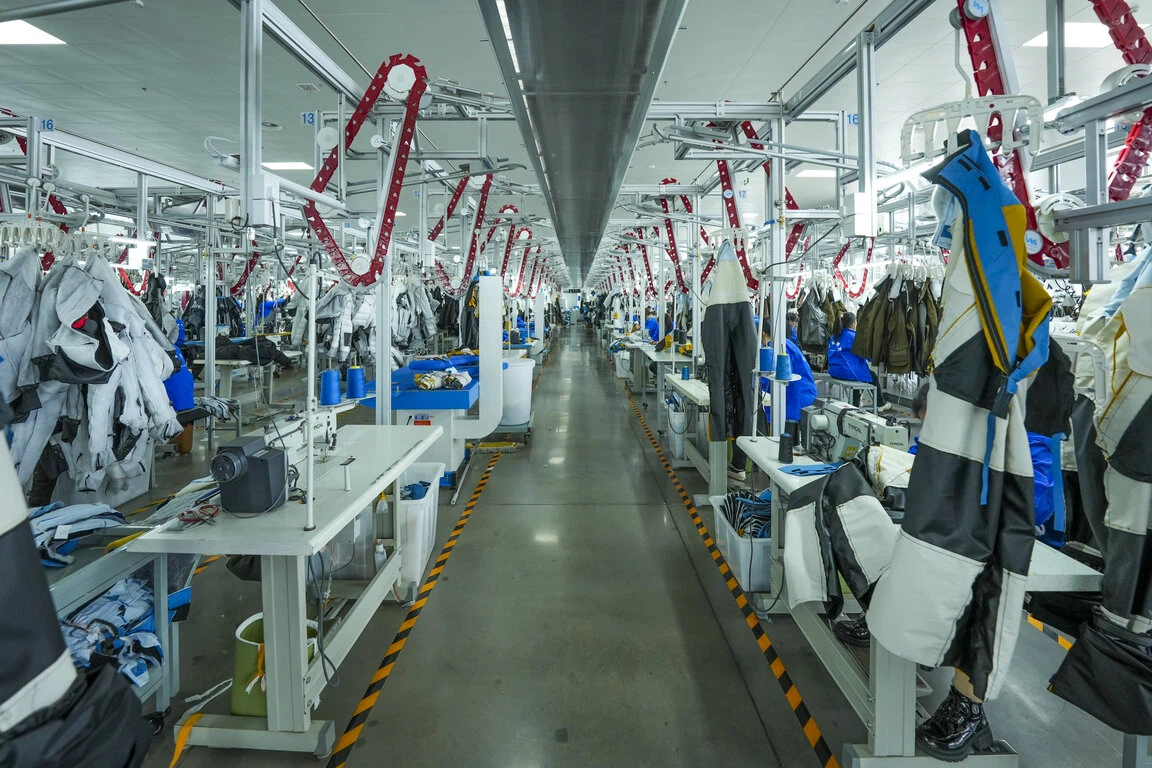
Digitalization and Automation: The Smart Factory Era
Technology is becoming a core enabler of competitive advantage in B2B clothing manufacturing. From product development to post-production logistics, forward-thinking manufacturers are integrating digital tools that streamline operations and elevate service delivery:
- 3D product design and virtual sampling reduce time to market and prototyping costs
- Cloud-based production management systems enable real-time order tracking
- AI-powered demand forecasting helps brands place smarter, data-driven orders
- Automation in cutting, sewing, and packaging increases consistency and efficiency
These innovations are helping manufacturers respond faster to shifts in demand while supporting higher customization levels-a major advantage in B2B contracts, where client specifications are precise and timelines are tight.

Sustainability as a Competitive Imperative
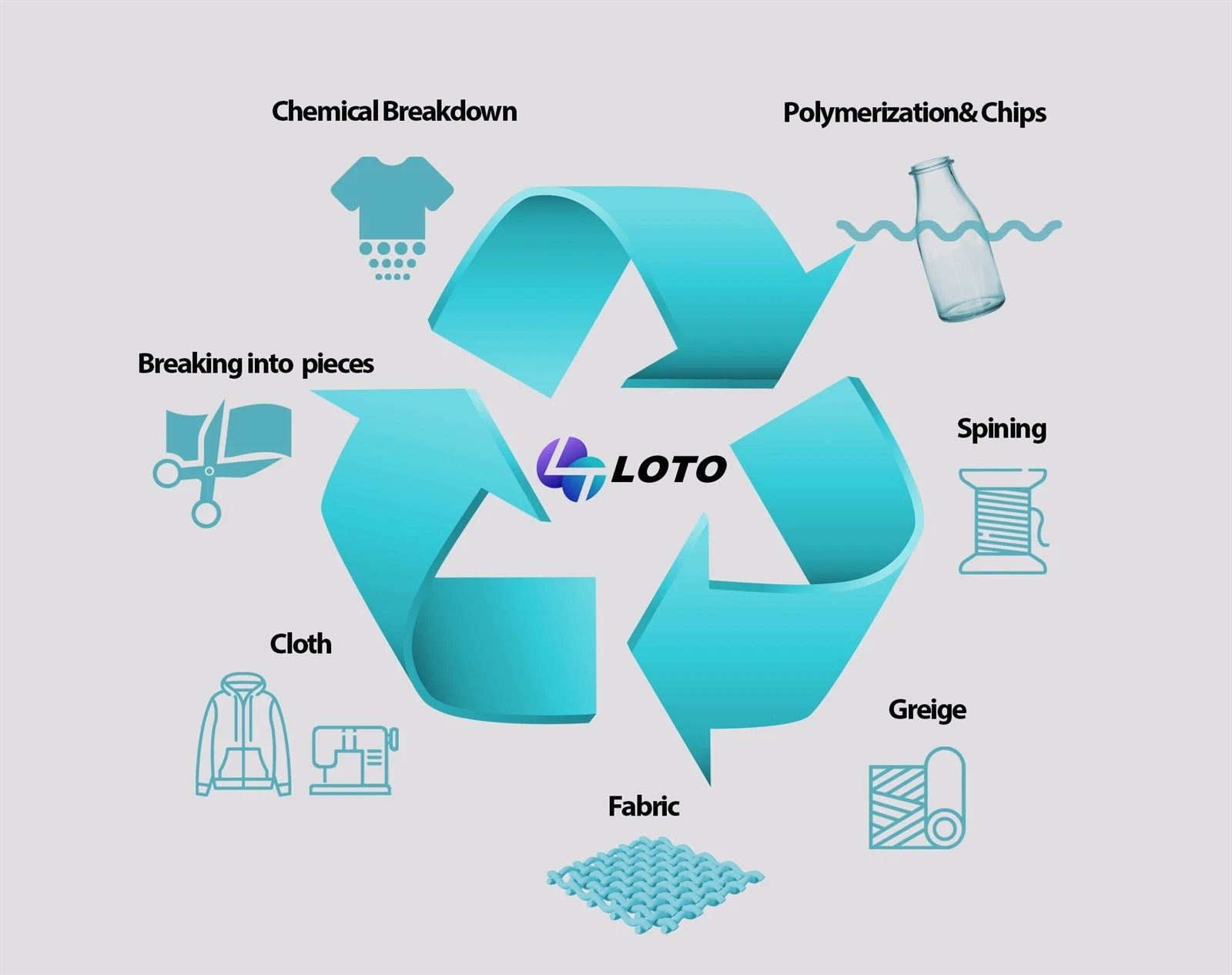
Today's buyers are not only price- and speed-driven-they're increasingly sustainability-conscious. Whether due to internal ESG goals or retailer pressure, B2B clients are demanding responsible sourcing, ethical labor practices, and traceability.
In response, many garment manufacturers are:
- Switching to recycled and organic fabrics
- Improving waste and water management practices
- Gaining certifications such as OEKO-TEX®, WRAP®, and GRS®
- Offering full product lifecycle transparency via digital platforms
Hebei Loto Garment, for example, integrates eco-conscious sourcing options for its clients and continues to explore ways to minimize its environmental footprint across both China and Bangladesh operations.
Partnership Over Procurement
Finally, the nature of B2B relationships is evolving. Clients are seeking strategic partners-not just factories-that can collaborate on design, mitigate risk, and support long-term growth. Manufacturers that demonstrate supply chain flexibility, strong communication, and innovation capabilities will be best positioned to succeed in this new era.
As the industry shifts from reactive sourcing to proactive global strategy, B2B manufacturers must be more than just efficient-they must be agile, digitally empowered, and forward-thinking. For those willing to evolve, this moment of disruption offers a clear opportunity to rise above the competition and redefine what world-class apparel manufacturing looks like.
Conclusion:Resilience, Strategy, and Flexibility: The New Pillars of Global B2B Clothing Manufacturing
The reimplementation of U.S. tariffs in 2025 has catalyzed a major shift in the global clothing manufacturing industry. While initially disruptive, these trade policies have also accelerated long-overdue transformations-forcing B2B apparel brands and manufacturers alike to rethink sourcing models, reevaluate production geographies, and embrace more agile, tech-enabled operations.
For China, the changes have brought both challenges and opportunities. Its role as the world's factory is evolving, giving way to a more decentralized manufacturing network that includes key players in Bangladesh, Southeast Asia, and Africa. For B2B clients, this decentralization presents a chance to diversify risk, optimize cost, and enhance responsiveness to shifting market demands.
The restructuring of the supply chain-from fabrics and trims to logistics and compliance-has also brought to light the need for trusted partners who can deliver not just volume, but strategic value. In this landscape, companies like Hebei Loto Garment have emerged as essential allies-offering global B2B clients tariff-resilient production through our Bangladesh facility, consistent quality standards, and tailored custom outerwear solutions.
We don't just produce garments-we enable our clients to future-proof their operations through flexible capacity, regional insight, and ongoing innovation. In a world where trade policies may change overnight, resilience, speed, and strategic collaboration will define the next generation of apparel success.
Looking Ahead
As we navigate this new chapter, Hebei Loto Garment remains committed to empowering our clients with adaptable, global production solutions. Whether you're seeking a reliable OEM outerwear manufacturer or a partner to support your brand's growth across volatile markets, we're here to help you move forward-smartly, sustainably, and strategically.
Contact us today to learn how our Bangladesh production base can support your business through these changes.