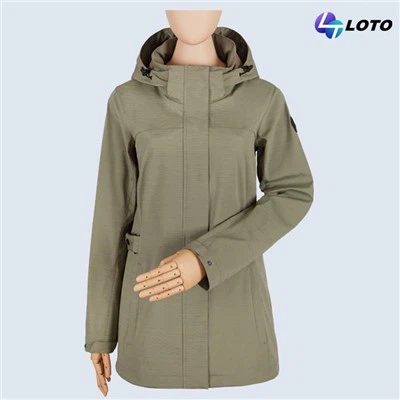
As a professional outerwear manufacturer with a long-standing commitment to crafting high-performance garments, Lotogarment understands the critical role that the right jacket plays in outdoor experiences. Whether navigating challenging mountain trails or simply braving a daily commute, outerwear should offer comfort, enhance performance, and ensure safety against the elements. This guide aims to provide a comprehensive, manufacturer-level comparison of softshell and hardshell jackets, two fundamental categories in the world of technical apparel. By demystifying their differences, we intend to empower outdoor enthusiasts and potential customers with the knowledge needed to make informed decisions when selecting their next jacket.
What is a Softshell Jacket? Unveiling the Flexible Layer
- Softshell jackets are engineered to provide a balance of comfort and performance, primarily focusing on breathability and flexibility .
- These versatile outer layers are designed to move with the wearer, making them ideal for activities where freedom of motion is paramount .
- Key features of softshell jackets include their exceptional breathability, allowing sweat vapor to escape quickly and efficiently, preventing overheating during strenuous activities .
- The use of stretchy fabrics, such as polyester or nylon blended with elastane, contributes significantly to their flexibility, ensuring unhindered movement during activities like skiing, snowboarding, and mountaineering .
- While not designed for heavy downpours, most softshell jackets offer a degree of water resistance, typically through a durable water repellent (DWR) finish that helps shed light rain and snow .
- Many softshell jackets are also lightweight, making them a preferred choice when minimizing bulk and weight is crucial, such as in backcountry skiing or climbing expeditions .
- Furthermore, some softshell models incorporate an insulation layer, providing additional warmth in milder conditions or serving as part of a layered system in colder environments .
- From a manufacturing standpoint, softshell jackets commonly utilize a durable woven nylon or polyester face fabric, often paired with a comfortable inner lining made of brushed polyester or fleece .
- The construction can vary, with options including 2-layer or 3-layer designs.
- Some 3-layer softshells incorporate a TPU membrane to enhance both water resistance and breathability .
- The breathability inherent in softshell fabrics stems from their structure, which allows air to move more freely through the material, facilitating the escape of moisture vapor produced by the body .
- This characteristic makes softshells particularly well-suited for high-energy activities such as hiking, climbing, biking, running, and skiing in cool, dry conditions or during light precipitation .
- Their versatility also extends to serving as an effective mid-layer worn underneath a more protective hardshell jacket when additional warmth is required in cold weather .
- Often described as a comfortable and pliable outer layer suitable for all-day wear , softshells prioritize mobility and breathability, offering solid wind resistance and the ability to shed light rain and snow .
- However, it is important to note that their water resistance, while beneficial in light moisture, does not provide the same level of protection as a dedicated waterproof hardshell jacket in heavy or prolonged rainfall .
- The degree of water resistance can vary among different softshell jackets, with some featuring waterproof membranes for enhanced protection, while others rely solely on water-repellent finishes .
- This variation allows consumers to choose a softshell that best aligns with their specific needs and expected conditions.
What is a Hardshell Jacket? The Ultimate Weather Protector
Hardshell jackets are specifically engineered to provide the highest level of protection against harsh weather conditions, functioning as the primary defense against wind, rain, and snow . These jackets are characterized by their rigid and often stiffer construction, a result of the durable, impermeable fabrics used in their design .
Key features of hardshell jackets include their guaranteed waterproofness, often achieved through the use of advanced waterproof and breathable membranes such as Gore-Tex . This waterproof barrier, combined with windproof properties, ensures that the wearer remains dry and warm even in heavy downpours and strong winds . High-quality hardshell jackets also offer breathability, allowing internal moisture vapor from sweat to escape, thus maintaining a comfortable internal environment and preventing overheating .
Durability is another hallmark of hardshell jackets, with the robust materials used providing increased resistance against abrasion and wear, ensuring long-term functionality . Additional features such as taped seams and a durable water repellent (DWR) finish further enhance their weather protection by preventing any moisture from seeping through .
From a manufacturer's perspective, hardshell jackets typically employ a 3-layer construction. This involves a waterproof and breathable membrane being sandwiched between a protective interior liner and a durable exterior face fabric .
Various types of membranes are utilized, with Gore-Tex being a prevalent choice, alongside other reputable options like eVent and Polartec NeoShell, as well as proprietary technologies developed by brands such as Outdoor Research (AscentShell), Patagonia (H2No), and The North Face (Futurelight) .
The breathability of these membranes allows sweat vapor to pass through the jacket from the inside out while preventing external water molecules from entering . Hardshell jackets are the recommended choice for activities in unpredictable or extreme weather conditions where reliable protection from wind, rain, and snow is essential .

They are considered a necessity for activities like backpacking and camping in wet environments, as well as for providing protection during heavy snowfall on the ski slopes . While offering superior weather protection, the stiffer nature of hardshell fabrics can sometimes result in a less flexible feel compared to softshells, and some models may produce a noticeable "crinkly" sound . Hardshell jackets are available in different layer configurations, including 2-layer, 2.5-layer, and 3-layer options . Two-layer jackets often include an added inner lining for comfort and membrane protection, while 2.5-layer versions feature a thin coating on the membrane's interior to reduce weight and pack size. Three-layer hardshells are the most durable and weather-resistant, featuring an additional layer bonded to the membrane for enhanced robustness, making them ideal for demanding activities in harsh conditions .
The Key Differences: Softshell vs. Hardshell - A Manufacturer's Breakdown
Understanding the core distinctions between softshell and hardshell jackets is crucial for making the right choice for specific needs and activities. As a manufacturer, Lotogarment recognizes the importance of clearly outlining these differences to empower consumers.
|
Feature |
Softshell Characteristics |
Hardshell Characteristics |
|
Waterproofness |
Typically water-resistant or water-repellent; may handle light rain but not prolonged downpours |
Waterproof due to a built-in membrane; designed for heavy rain and snow |
|
Breathability |
Generally superior breathability, allowing for excellent moisture vapor escape |
Good breathability in high-quality models, but typically less breathable than softshells |
|
Flexibility |
Highly flexible and stretchy, providing excellent freedom of movement |
Stiffer fabric, which can sometimes restrict movement |
|
Comfort |
Softer and more comfortable against the skin, often with a fleece lining |
Can feel less comfortable and may produce a "crinkly" noise |
|
Warmth/Insulation |
Often provides some insulation due to thicker fabric or fleece lining |
Minimal to no insulation; designed to be worn over insulating layers |
|
Durability |
Good durability, with some models featuring abrasion-resistant materials |
Generally more robust and abrasion-resistant due to thicker materials |
|
Weight |
Can be heavier than some non-insulated hardshells |
Often lighter and more packable, especially non-insulated versions |
|
Packability |
Less compressible than some hardshells |
Highly packable, often able to fit into its own pocket |

- The fundamental difference lies in their primary function: hardshells prioritize complete waterproofness, making them ideal for wet conditions, while softshells emphasize breathability and flexibility for active pursuits in more moderate weather .
- The waterproof nature of hardshells is achieved through a membrane that prevents water penetration, a feature typically absent in softshells, which instead rely on water-resistant treatments .
- This distinction in waterproofness often comes with a trade-off in breathability, as the impermeable membrane in hardshells can sometimes hinder the escape of moisture vapor compared to the more air-permeable fabrics used in softshells .
- However, advancements in membrane technology continue to improve the breathability of hardshell jackets.
Comfort and flexibility also differ significantly. Softshells, with their stretchy and often softer materials, offer a greater range of motion and a more comfortable feel against the skin . In contrast, the stiffer fabrics of hardshells, while contributing to their durability and weather protection, can sometimes feel less comfortable and may produce noise during movement . Regarding warmth, softshells often provide a degree of insulation, either through their fabric weight or an added fleece lining, making them suitable as a standalone outer layer in cooler conditions . Hardshells, on the other hand, typically offer minimal insulation and are designed to function as a protective outer layer worn over insulating mid-layers . Finally, in terms of durability, hardshells generally exhibit greater resistance to abrasion and wear due to the robust nature of their materials . However, some softshells are also constructed with durable, stretch materials to withstand demanding activities . The choice between a waterproof hardshell and a more breathable softshell often involves considering the specific balance of these features required for the intended activity and environmental conditions.

When to Choose Which: Matching the Jacket to Your Adventure
The selection between a softshell and a hardshell jacket is largely dictated by the type of activity and the anticipated weather conditions. As experienced outerwear manufacturers, we at Lotogarment can offer the following guidelines:
|
Activity |
Recommended Jacket Type(s) |
Key Considerations |
|
Hiking |
Softshell, Hardshell |
Softshell for cool, dry days prioritizing breathability; Hardshell for potential rain or snow, especially on longer treks |
|
Skiing/Snowboarding |
Softshell, Hardshell |
Softshell for dry, cold days favoring mobility; Hardshell for wet, snowy conditions or resort skiing for wind protection on lifts |
|
Mountaineering/Climbing |
Softshell, Hardshell |
Softshell for breathability during ascents in fair weather; Hardshell for protection in harsh, high-altitude conditions; Layering is crucial |
|
Everyday Wear |
Softshell, Hardshell |
Softshell for comfortable warmth and light weather protection in cool, dry conditions; Hardshell for reliable rain protection during commutes |
|
Backpacking |
Hardshell (essential), Softshell (optional) |
Hardshell is a must for waterproof protection; Softshell can be beneficial in dry conditions for breathability and comfort |
|
Trail Running |
Softshell |
Prioritizes breathability and flexibility for high-exertion activities in mild conditions |
For hiking, a softshell jacket can be an excellent choice on cool, dry days where breathability is paramount . However, if there's a significant chance of rain or snow, a hardshell jacket is the more prudent option to ensure waterproof protection .
01
Similarly, for skiing and snowboarding, softshells offer enhanced mobility and breathability on dry, cold days, while hardshells provide crucial protection against wet snow and wind, particularly during resort skiing where exposure on chairlifts can be significant .
02
In mountaineering and climbing, the dynamic nature of the activities often calls for a layered approach. A softshell can be ideal for the ascent in fair weather, offering breathability and flexibility, while a hardshell is essential for protection against unpredictable and often severe weather conditions encountered at higher altitudes .
03
For everyday wear, a softshell jacket can provide comfortable warmth and light protection against wind and drizzle in cool, dry weather, whereas a hardshell offers reliable waterproofness for rainy commutes and outings . Backpackers should always include a hardshell in their gear for guaranteed protection against rain and unexpected storms. A softshell can be a valuable addition for dry conditions, offering breathability and comfort during hiking, but it should not replace the essential waterproof layer of a hardshell .
04
For high-intensity activities like trail running, breathability and flexibility are key, making softshell jackets the preferred choice in mild weather conditions . Ultimately, the optimal jacket choice aligns with the specific demands of the activity and the environmental challenges anticipated.
05
Layering Like a Pro: Integrating Softshells and Hardshells into Your System
Both softshell and hardshell jackets are integral components of an effective layering system designed to optimize comfort and performance in various outdoor conditions . The fundamental principle of layering involves wearing multiple layers of clothing that can be added or removed to regulate body temperature and manage moisture. This system typically consists of three key layers: a base layer, a mid-layer, and an outer shell .


The base layer, worn next to the skin, is responsible for wicking away moisture (sweat) to keep the body dry . Mid-layers provide insulation, trapping warm air to maintain body heat. Common mid-layer options include fleece jackets, down jackets, or insulated synthetic jackets . The outer shell, which is where softshells and hardshells come into play, provides protection from the elements such as wind, rain, and snow .
A softshell jacket can function as an outer shell in mild, dry conditions, offering wind resistance and breathability while allowing for a full range of motion . In colder or wetter weather, a softshell can also serve as an effective mid-layer worn over a base layer and under a hardshell jacket, providing an extra layer of insulation without significantly restricting movement .


A hardshell jacket primarily acts as the protective outer layer in a layering system . Its waterproof and windproof properties shield the wearer from harsh weather conditions, ensuring that the base and mid-layers remain dry and can effectively perform their insulating functions . In this scenario, the layers underneath the hardshell provide the necessary warmth, which can be adjusted based on the temperature and activity level .
Understanding how to effectively integrate both softshell and hardshell jackets into a layering system allows outdoor enthusiasts to adapt to changing weather conditions and activity levels, ensuring optimal comfort and performance throughout their adventures.
FAQ About Softshell and Hardshell Jackets
Based on common inquiries from outdoor enthusiasts, Lotogarment addresses some frequently asked questions regarding softshell and hardshell jackets:

01.Is softshell waterproof?
02.How breathable is softshell?
03.Is softshell windproof?
04.How warm is a softshell jacket?
05.What are hardshell jackets used for?
06.Are hardshell jackets breathable?
07.When should I wear a softshell vs. a hardshell?
08.Can I use a softshell as a rain jacket?
09.What is the difference in the feel of the fabric?
10.Do I need both a softshell and a hardshell jacket?
Conclusion: Making the Right Choice for Your Needs
In summary, softshell and hardshell jackets represent distinct approaches to outerwear design, each excelling in different scenarios. Softshells offer superior breathability and flexibility, making them ideal for active pursuits in moderate weather, while hardshells provide ultimate protection against wind and rain, essential for challenging conditions.
The optimal choice hinges on the intended use, the expected weather, and individual priorities regarding comfort, breathability, and protection. As a manufacturer dedicated to providing high-quality outerwear, Lotogarment encourages consumers to carefully consider their specific needs and the demands of their adventures when selecting between these two versatile jacket types.
Explore Lotogarment's extensive collection of softshell and hardshell jackets designed to meet the diverse needs of outdoor enthusiasts. Visit our website today to discover the perfect outerwear for your next adventure.
As a professional outerwear manufacturer, Lotogarment is dedicated to crafting high-performance garments for all your outdoor needs. We welcome you to contact us for customized brand requirements and experience the quality and expertise that define our products.