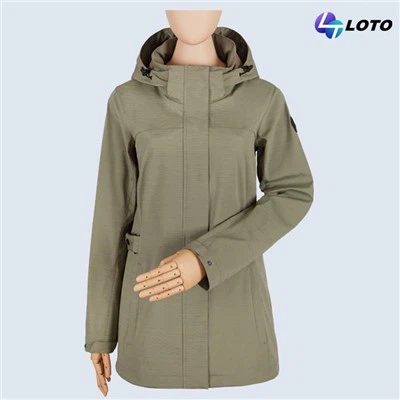
From the earliest days of human civilization, clothing has played a fundamental role in protecting us from the elements. Outerwear, particularly, stood as the front line against nature's whims. Today, as technology advances at breakneck speeds, the outerwear industry is undergoing a transformation that holds promises of increased sustainability, efficiency, and functionality. Let's unravel this tale of innovation.

Smart Fabrics: More Than Meets The Eye
The rise of smart fabrics has revolutionized the very fibers we wrap ourselves in. These are materials engineered to interact with their environment in some way.
Heat-responsive materials: These fabrics adjust their insulation properties based on the ambient temperature, keeping wearers comfortable across a broader range of conditions.
Integrated wearable technology: With the rise of IoT (Internet of Things), jackets can now come embedded with tech features – think heated jackets, or those with integrated LED lights for nighttime safety.
Self-healing fabrics: Drawing inspiration from biological processes, some outerwear materials are being developed to 'heal' minor cuts or tears, dramatically extending garment life.
Automation and AI in Production
Robotic systems and AI-driven machines are making headways into textile manufacturing.
Automated sewing: Robots, with their precision and speed, are being introduced to handle intricate sewing tasks, reducing production times and human errors.
Predictive maintenance: Using AI, factories can predict when machines are likely to break down or need maintenance, ensuring smoother production lines and minimizing downtime.
Customized production: AI-driven systems can analyze individual consumer preferences and tailor-make outerwear to specific requirements, heralding a new age of personalization.
3D Printing: A New Dimension in Production
3D printing has moved beyond prototypes and is becoming a feasible method for producing finished textile products. This technique allows:
Rapid prototyping: Designers can see and feel their designs in a matter of hours.

Customization: Unique patterns, structures, and designs can be printed on-demand, minimizing waste.
Material innovation: 3D printing allows for the exploration of unique material combinations and structures, resulting in novel fabric properties.
Sustainability Through Tech
With growing awareness about environmental concerns, technology offers solutions for more sustainable production.

Waterless dyeing techniques: Using supercritical carbon dioxide, some companies are dyeing fabrics without water, addressing one of the industry's most significant environmental challenges.
Recycling tech: Innovations in breaking down old garments to their basic fibers allow for higher quality recycled materials, propelling the industry towards a circular economy model.
Augmented Reality (AR) and Virtual Reality (VR) in Design
AR and VR are not just for gamers. In outerwear production:
Virtual prototyping: Before producing a physical sample, designers can explore their creations in a virtual space, making adjustments with ease.
Consumer shopping experience: Customers can 'try on' outerwear in virtual fitting rooms, ensuring they're happy with their selections before making a purchase.
Conclusion
As technology stitches its path into the future of outerwear production, the industry stands at the cusp of an era defined by increased efficiency, sustainability, and personalization. The fusion of fashion and technology paints a promising picture, one where both the planet and its inhabitants benefit. The future, it seems, is not just about wearing our clothes but interacting with them in ways we never imagined.