Table of Contents
Why Down Jackets are a Great Product for Retailers and Wholesalers
What Are Down Jackets and How Are They Made?
The Challenges of Down Jackets
How to Choose the Best Down Jackets for Your Business: A Buyer's Guide
Evaluating Construction and Materials Details
Understanding Jacket Design Features
Overview of the Down Jacket Market
Responsibly Sourcing Ethical Down
Certifications for Raw Materials
Selecting Inventory by Climate
Managing Inventory and Stock Levels
Understanding inventory items' position in their product life cycle
Improve demand forecasting accuracy
Use up excess inventory by redistributing stock
Use automation to improve insights
Pricing and Positioning Strategies
How to Succeed in the Down Jacket Market with the Right Supplier
Why Down Jackets are a Great Product for Retailers and Wholesalers
You know it's important to only stock products that are guaranteed to sell, which is why we are showcasing down jackets in this article. These incredibly warm, lightweight outdoor jackets are already fashionable and popular, but in the next decade, analysts predict demand for these products will soar. They're perfect for low-intensity everyday activities in cold weather, but they're equally popular in extreme environments too. Whether it's walking from the car to the supermarket or skiing down a glacier, buyers all over the world choose down jackets for winter warmth protection and fashionable good looks.
Fashion labels sell their branded down jackets at high prices because customers love them, so retailers and wholesalers can do the same.

So, to summarize the benefits:
High Demand: Down jackets do a great job of locking in warmth, so they are in high demand, especially in regions with cold climates. They are a staple in winter wardrobes, making them a consistent seller, but they're also popular as casualwear among label-loving, fashion-conscious types.
Profitability: Due to their popularity and durability, down jackets can be sold at higher price points than other types of outerwear, so you can look forward to higher profit margins.
What Are Down Jackets and How Are They Made?
A down jacket is a lightweight outdoor coat insulated with soft and warm under feathers from ducks or geese. Nature has always been the best designer, and it's done a great job with down. Down is an amazing natural insulator as its loft (or fluffiness) creates thousands of tiny air pockets that trap warm air and retain heat, thus helping to keep the wearer very warm even in the coldest winter weather.

After the birds are processed for food, these feathers are collected and sterilized. The raw down is then shipped in large bails to factories where it's separated into lots based on the size of the down clusters. Each down lot is given a 'fill power' number and is recorded in a database so that it's trackable both by manufacturers and consumers. The higher the fill power number, the more air per ounce of material that the down traps and the warmer it is. The down is finally sealed up to keep it safe from any contaminants.

Making down jackets involves sewing two components together: an insulation layer on the inside that's filled with the down feathers, and a windbreaker shell on the outside, which is often made of heavy nylon. There are different methods of constructing down jackets, including sewn-through, box baffle, and heat-seamed baffle designs.
The Challenges of Down Jackets
Cost
While down jackets have many benefits, they also have one or two potential drawbacks that are worth considering. First, good quality down jackets tend to be more expensive than synthetic alternatives. The raw materials and specialized construction can result in higher costs that get passed on to the consumer. Down also requires more care and maintenance than synthetic fills to preserve its properties.

Maintenance
Down garments are a bit like wool in terms of how much care and attention they need. They should always be washed gently and dried thoroughly to retain their loft and to stop mildew from building up. Drying can take around three hours in a dryer on a low setting. Tossing in a couple of clean tennis balls ensures the down fluffs back up.
Ethical Concerns
Look for the Responsible Down Standard (RDS) when selecting a manufacturer. With this in place, you can be confident that they adhere to ethical best practices in how the birds are treated.
How to Choose the Best Down Jackets for Your Business: A Buyer's Guide
Choose from our excellent range of high-quality down jackets. Here's an example:

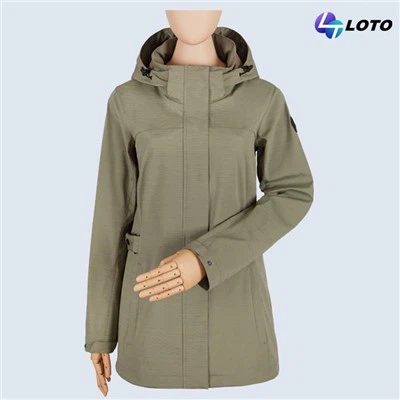
It's called the Featherweight Down Women's Jacket and features an 80/20 split of duck down to duck feathers. We currently offer several men's and women's designs with real and artificial down for the supreme coziness that customers love.
Evaluating Construction and Materials Details
Of course, as a retailer or wholesaler, you'll want to understand the construction methods and materials used in down jackets, so here's a breakdown:
Shell Fabrics
The shell fabric is the outermost layer, and so it needs to be resilient. It's often made of wool, cotton, linen, and synthetic fibers like polyester and nylon.

Lining Types
The lining of a jacket can affect its comfort, durability, and style. Jacket linings are usually made from silk, polyester, cotton, and rayon. Silk is expensive but soft, lightweight, and breathable. Polyester is durable, affordable, and easy to care for. Cotton is more breathable while rayon is more lightweight and better at wicking away moisture.
The two main types of jacket linings are: fused and sewn. With fused linings, a layer of adhesive is applied to the back of the lining fabric and then pressed onto the jacket fabric. This creates a smooth, flat lining that doesn't need any stitching. Sewn linings are made by cutting out the lining fabric so that it's the same shape as the jacket and then the two pieces are sewn together.
Stitching
Most down jackets are stitched-through, so the inner and outer jacket parts are stitched together to create channels for the down insulation.
Performance Factors
The performance of a down jacket is largely determined by its fill power, which measures the loft of the down and its insulating properties. A higher fill power number means that it's got more air pockets, so it will have a better warmth-to-weight ratio. The typical range is 300-900. To illustrate, here's one that has a fill power rating of 700:

Understanding Jacket Design Features
Different Hood Designs
Standard Hoods: These are the most common type of hoods found on down jackets. They provide warmth and protection from the elements.

Helmet-Compatible Hoods: These hoods are larger and designed to fit over most helmets, making them ideal for climbers and mountaineers.
Hoods with Fur Trim: Often found on parka-style down jackets, these hoods feature a fur trim that provides additional warmth and wind protection (not to mention style):

Adjustable Hoods: Some down jackets feature hoods with adjustable drawstrings or cords, so customers can get a fit that suits them.
Detachable Hoods: These hoods are usually zipped or buttoned in place. Here's an example:

Pocket Placements
Down jackets usually come with a range of different pocket placements. Here are some common types:
Hand Warmer Pockets: These are usually at waist level to keep hands warm. They are often lined with soft, warm material for added comfort.
Chest Pockets: situated on the chest of the down jacket which is the perfect place for storing small items like keys or a phone.
Internal Pockets: located inside the jacket, they're great for skiers who don't want to lose their phones on a downhill run!
Cargo Pockets: larger pockets are usually found on the front of the jacket. They're roomier to fit bigger items.
Sleeve Pockets: small pockets located on the jacket sleeve. They're ideal for ski passes or keys.

Overview of the Down Jacket Market
Market Size
The size of the market is another good reason to stock down jackets. In 2022, the global down jacket market was valued at approximately $157.4 billion. It's a huge and growing market, so it makes perfect sense to jump in.
Growth Trends
The down jacket market is expected to expand at a compound annual growth rate (CAGR) of 12.8% between 2023 and 2031, reaching $456 billion by the end of that period. Although down is already a great insulator, one of the elements expected to drive this growth is technological advancements in down insulation materials. These improvements will result in better warmth-to-weight ratios and more effective water resistance. Researchers also point to expected increases in the popularity of outdoor activities that will drive further sales growth.
Another growth driver is rising income levels worldwide. More consumers than ever are expected to have more disposable income than ever.
Customer Demand
Pricing
As with any product, pricing for down jackets can vary a lot depending on things like brand value, quality of materials, and the look of any individual design. A quick search on the web will tell you that prices can range from around $60 for a brand like Uniqlo up to more than $400 for an example made by Arc'teryx. As a retailer or wholesaler, this gives you lots of scope for competitive pricing.
Competitive Landscape
The competitive landscape in the down jacket market includes various players offering products with different features and at different price points. Some key players include brands like Rab, Berghaus, Mountain Equipment, Patagonia, and The North Face, among others. These big names account for the lion's share of the market, but sales opportunities still exist at every level.
Regional Outlook
North America is forecasted to be the dominant market for growth in the next few years. Severe winter weather and the increasing enthusiasm for adventure sports will fuel this growth, and the rise in the prevalence of longer and harsher winters in Europe paints a similar picture. Asia Pacific is the fastest growing down jackets market, as customers become more product aware thanks to promotional activities via print and digital media.
Responsibly Sourcing Ethical Down
With more potential customers being conscious of supply chain ethics, this must be a consideration with down jackets too. Ethical down is sourced with animal welfare in mind. Look for the Responsible Down Standard (RDS) certification, which we previously mentioned, and the Global Traceable Down Standard. Both certifying agencies issue their labels based on how the ethical down is sourced. They prove that down sources are traceable and that farms adhere to a set of animal welfare regulations.
Sourcing Considerations
Sourcing for down jackets also involves considerations around sustainability. As with many other industries, there's a push within fashion to reduce its contribution to greenhouse gas emissions. The goal is 45% by the year 2030. This needs to be a conversation that you have with whichever supplier you choose to select, and you're welcome to have it with us. One of the ways that Lotogarment works to meet such standards is our commitment to using certified recycled materials, wherever possible.
Certifications for Raw Materials
The Responsible Down Standard (RDS) is one of the main industry certifications. The North Face created it in partnership with Textile Exchange and Control Union Certifications. It makes sure that down comes from birds that have not been ill-treated through force-feeding or live plucking. This certification shows that materials in the supply chain are traceable. They can be tracked confidently all the way from the farm to the finished garment, and this helps to explain why the RDS standard has become so popular recently.
Selecting Inventory by Climate
Down jackets are typically in high demand in regions with colder climates, as they provide excellent insulation and warmth. Here are some regions where down jackets are likely to be popular:
North America: Places with harsh winters like Alaska, Northern United States, and Canada would offer lots of demand for down jackets.
Europe: Northern and Eastern European countries such as Norway, Sweden, Finland, Russia, and the Alpine regions where temperatures can drop punishingly low during winter.
Asia: High-altitude regions like the Himalayas in Nepal and India, as well as northern territories like Mongolia and parts of China.
Southern Hemisphere: In the southern hemisphere, countries like Argentina and Chile in South America, and New Zealand have regions with cold climates, the kind of places that down jackets were invented for.
Managing Inventory and Stock Levels
Here are some tips for demand forecasting and inventory management for down jackets:
Understanding inventory items' position in their product life cycle
Demand will change over time. There's more demand for down jackets in winter than in summer, so adjust your inventory levels accordingly.
Improve demand forecasting accuracy
Try using techniques such as moving averages, trend analysis, or regression analysis. Analyzing historical data can help you forecast future demand.
Use up excess inventory by redistributing stock
Keep an eye on your locations where stock is moving fastest so that you can place most of your inventory there. This cuts the cost of storage and boosts your sales at the same time for a double win.
Use automation to improve insights
Re-ordering used to be a guessing game, but nowadays there are plenty of automated options that constantly monitor your stock levels and calculate the ideal re-ordering time. Automation tools like Lightspeed, EazyStock or Oberlo can improve your inventory management by providing real-time insights Into stock levels, and by automating your forecasting and reordering processes.
Seasonal Trends
Down jackets are typically in higher demand during colder months. Understanding these seasonal trends can help you better predict demand and manage your inventory. Listening to your customers can give you great insights into what they want. Use this feedback to adjust your inventory levels.
Competitor Benchmarking
Keep an eye on what your competitors are doing. If they're stocking up on a particular style of down jacket, it might be worth finding out why.
Consider using these strategies to reduce your costs:
Bulk Purchasing
Buying in bulk often allows you to get a better price per unit. We can certainly help with large orders thanks to our nine production lines and 400 skilled and dedicated workers. They can provide a monthly capacity of 50,000 to 70,000 garments, which we think should be enough!
Just-In-Time Delivery
This involves coordinating with suppliers so that products arrive when they are needed. This can lower storage costs and prevent products from falling out of fashion before they're sold.
Clearance Sales
The profit is lower with these, but they help you to free up storage and generate cash.
Pricing and Positioning Strategies
Here are some of the best pricing and positioning strategies for selling down jackets:
Premium Pricing
Set a high price to underline the superior quality, exclusivity, or brand appeal of your down jackets. Top-tier pricing gives customers the sense that your products are luxurious and high-end.
Penetration Pricing
Set the initial price low to attract customers and pick up market share. Once you've established a customer base you can then slowly increase your prices. For new brands or product lines, this can be ideal.
Dynamic Pricing
Adjust your prices to respond to marketing conditions, like changes in competition, demand, or season. For instance, you could offer discounts at the end of the winter season.
Competition-Based Pricing
Set your prices in accordance with what your competitors are charging.
Marketing, Promotions, and Display Best Practices for Promoting and Showcasing Down Jackets In-Store and Online.
Here are some best practices for promoting and showcasing down jackets both in-store and online:
Social Media Marketing
Social media platforms like TikTok, YouTube, and Instagram are great tools for fashion brand promotion if you can partner with the right influencers. Some have reached in the tens of millions and their recommendations can send your sales into the stratosphere. But even more modest campaigns can be well worth the investment compared to traditional print and broadcast media.
Interactive Product Images
Online images don't need to be static anymore. By offering zoom-in features and 360° rotation, you can give potential customers the chance to examine the details of your down jackets.
Live Selling
Live selling or live shopping is a practice that has taken on a new lease of life, migrating from TV to countless YouTube channels where influencers enthuse about products and provide tutorials for using them. This tactic would be ideal for promoting your down jacket brand.
In-Store Displays
Still valuable, even in these online times! But do watch out. There's a trend where customers will go in-store to try on products and then look for cheaper places to buy them online.
How to Succeed in the Down Jacket Market with the Right Supplier
The dominance of certain brands like The North Face even in temperate climates has provided a significant boost to the down jackets market. That coupled with the rising popularity of outdoor and mountain sports means that now is the perfect time to hop on board and take advantage of the down jackets trend.
Trackers, skiers, snowshoers, campers, and skateboarders alike are driving a growth phase that is forecast to continue for years. If you want to be a part of it, then it's essential to partner with a reliable manufacturer that also offers ethically sourced high-quality products, along with great customer service.
Lotogarment has been doing this for more than two decades and we can help you ride the down jackets wave all the way to 2031 and beyond. Get in touch with us today and we will be delighted to tell you more about how we can help your business to succeed in this highly promising market.