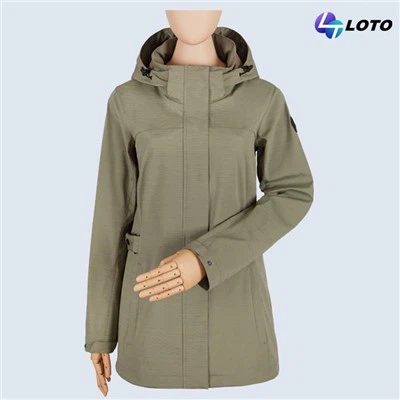
As global consumer preferences shift decisively toward corporate social responsibility, the selection of raw materials is no longer just a design choice-it is a compliance checkpoint. Meeting these demands requires an agile manufacturing partner that combines certified green sourcing with robust, high-volume automation.
Executive Sourcing Summary:
This technical whitepaper outlines the essential parameters for de-risking high-volume custom padded jacket production. Published by Loto Garment, this guide explores the commercial integration of Global Recycled Standard (GRS) certified eco-insulation, modern anti-migration quilting craftsmanship, and our flexible multi-country production capabilities optimized to insulate brands from shifting international tariff structures.
Chapter 1: Advanced Insulation Materials & Sustainability Compliance
The soul of an insulated jacket lies within its fill. In 2026, the global outerwear market has transitioned away from unverified virgin synthetics. Brands importing into North America and the European Union face stringent auditing regarding the transparency of recycled materials. At Loto Garment, we have built a fully traceable material pipeline to ensure your custom outerwear satisfies both thermal performance ratings and international environmental audits.
1.1 The Dominance of GRS-Certified Recycled Eco-Insulation
To align with the industry-wide push for circular fashion, our manufacturing facilities specialize in utilizing post-consumer recycled polyester padding. We partner closely with authoritative third-party trace certification bodies to verify the origin of our components:
-
Global Recycled Standard (GRS) Alignment: Every batch of recycled eco-insulation processed in our factories is accompanied by an authentic Transaction Certificate (TC), tracing the material directly back to certified recycled ocean-bound plastics and post-industrial waste. You can verify our material compliance through the official Textile Exchange GRS Framework.
-
OEKO-TEX Standard 100 Compliance: Beyond being recycled, our insulation layers are strictly tested and verified to be 100% free from harmful chemical substances, making them completely safe for prolonged skin contact in retail consumer apparel.

Figure 1: Traceable, GRS-certified recycled polyester padding utilized in Loto Garment's eco-friendly outerwear programs.
1.2 Dynamic Insulation Sourcing: Adapting to Your Target Specs
Different market segments demand different thermal-to-weight ratios. Rather than offering a restrictive, uniform padding catalog, Loto Garment's technical team engineers custom jacket fills tailored precisely to your brand's specific geographic climate and retail price architecture:
| Insulation Type | Technical Performance Profile & Brand Positioning |
|---|---|
| Repreve® Recycled Padding | The premier global benchmark for traceable recycled fibers. Highly marketable consumer-facing branding, optimized for mid-to-high end retail winter catalogs looking for strong eco-marketing leverage. |
| DuPont™ Sorona® / 3M™ Thinsulate™ | Advanced bio-based and ultra-fine synthetic clusters. Delivers superior CLO (thermal warmth) ratings with minimal bulk, mimicking natural down compression profiles. Ideal for premium technical, athletic, or slim-profile urban quilted jackets. |
| Standard High-Loft Polyester Fill | Cost-optimized engineered sheets offering excellent resilience and loft retention. Perfect for large-volume corporate uniforms, workwear, and high-frequency promo apparel requiring maximum cost efficiency. |
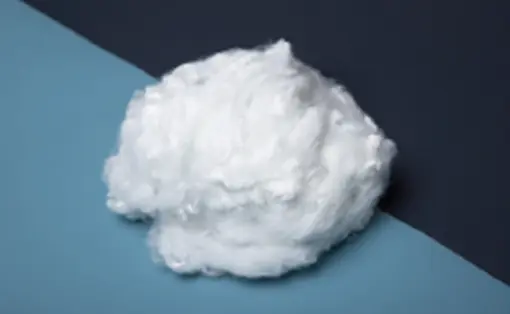
Figure 2: Custom density and weight calibration of synthetic padding sheets on our factory floor.
By combining GRS traceability with global name-brand synthetic partnerships, Loto Garment ensures your product line stands up to strict international legal compliance while delivering uncompromising warmth. If your product team requires specific Clo value testing or localized custom weight parameters (e.g., 60gsm to 200gsm body-mapping), you can consult with our raw material engineering desk to secure custom swatches.
Chapter 2: Precision Quilting Craftsmanship & Fiber Migration Control
A common failure point in poorly manufactured padded jackets is fiber migration-often referred to as "leaking" or "clumping." After multiple retail wash cycles, sub-standard insulation sheets tend to break down, shifting inside the jacket shell and creating cold spots. At Loto Garment, we neutralize this risk through structural garment engineering, combining automated machinery with advanced interior barrier fabric systems depending on our clients' specific product tiers.
2.1 Automated Quilting Machinery & Stitch Density Calibration
Manual quilting introduces human error, variations in thread tension, and inconsistent stitch lines that weaken the shell fabric. To ensure absolute uniformity across tens of thousands of mass-produced units, our production floors utilize state-of-the-art automated CNC quilting machinery:
- Programmable Stitch Precision: Our automated quilting matrices are pre-programmed via digital CAD templates. This ensures that custom geometric baffles, diamond quilts, or horizontal channels maintain a perfectly uniform Stitches Per Inch (SPI) ratio, distributing thread tension evenly to prevent seam puckering.
- Thermal-Lock Needle Engineering: High-speed sewing friction can melt synthetic insulation fibers, leading to premature breakdown. Our machinery operates with calibrated cooling cycles and specialized needle profiles to preserve the structural integrity of both the thread and the eco-padding.

Figure 3: Computerized automated quilting machinery ensuring identical baffle structures across bulk production.
2.2 Multi-Layer Anti-Migration Systems & Down-Proof Linings
For premium retail brands and severe winter environments, stitching control alone isn't enough. We deploy a dual-tier protection matrix tailored to our clients' precise technical specifications:
- High-Density Down-Proof Scrims: For technical outerwear require maximum fiber security, we integrate ultra-lightweight, high-density down-proof interior linings (scrims). This extra layer acts as a physical shield, completely blocking fine synthetic microfibers or down clusters from penetrating the outer shell fabric.
- Calendered Fabric Selection: When a client prefers a lightweight 2-layer construction without an extra scrim, we utilize outer shell fabrics that have undergone professional heat calendering. This process seals the micro-gaps between the woven yarns, creating a native barrier against padding migration.

Figure 4: Microscopic stitch inspection verifying the zero-migration alignment of technical quilted panels.
By mastering both automated mechanical stitching and multi-layer barrier fabrication, Loto Garment guarantees that your winter garments retain their original loft, aesthetic symmetry, and thermal efficiency year after year. If your quality assurance team requires independent testing, we can provide pre-production samples for rigorous wash-and-dry cycle evaluations. Request a technical sewing sample from our QA department today.
Chapter 3: Multi-Origin Manufacturing for High-Volume Price Optimization
For global retail chains and commercial outerwear brands, managing the single-unit Landed Cost of a padded jacket catalog is a continuous financial challenge. Because insulated garments require substantial fabric yields and extensive quilting labor hours, relying on a single manufacturing origin exposes brands to severe tariff fluctuations and capacity bottlenecks. As a global commercial jacket manufacturer, Loto Garment mitigates these commercial risks through our optimized, multi-country production ecosystem spanning China, Bangladesh, and Africa.
3.1 Strategic Hub Allocation & Predictable Lead Times
Our global manufacturing matrix operates under a centralized management desk, allowing us to split and route padding jacket production based on order size, style complexity, and target delivery milestones:
- The China R&D and Express Hub: Our domestic facilities are optimized for rapid-turnaround programs, multi-material premium activewear jackets, complex pattern-matching quilting, and initial sales-sample prototyping.
- The Overseas Volume Hubs (Bangladesh & Africa): Specialized in absorption scaling. These mass-production facilities are configured for high-volume, standardized commercial padded jackets. Once raw materials arrive at our overseas sorting docks, our lines operate on a highly structured, dependable 60 to 90-day bulk manufacturing lifecycle, ensuring your inventory arrives in seasonal retail warehouses without delay.

Figure 5: High-capacity mass production lines optimized for standard commercial quilted jackets.
3.2 Dynamic Tariff Adaptation & Cross-Border Logistics Routing
In the 2026 international trade landscape, trade parameters, duties, and customs preferences remain fluid. Outerwear brands importing into the United States or European markets cannot afford rigid supply lines.
At Loto Garment, our trade compliance desk cross-references localized export data alongside global market frameworks tracked by platforms like the World Trade Organization (WTO).
Instead of committing blind orders, we analyze active preferential trade agreements, GSP availability, and active tariff brackets *at the physical time of your seasonal purchase order alignment*. Whether optimizing duties via our duty-free eligible channels in Bangladesh or adjusting production streams through our African infrastructure, we provide transparent, legal routing pathways to protect your margins and optimize bottom-line procurement costs.
By marrying raw manufacturing scale with data-driven logistical adaptability, Loto Garment ensures your seasonal rollout remains safe, highly profitable, and resilient against macro-economic friction. To run a comparative tariff-routing simulation for your upcoming winter inventory, you are invited to connect with our logistics compliance division for a comprehensive supply chain mapping blueprint.
Chapter 4: Step-by-Step Sourcing Process for Custom Padded Jackets
To maintain full supply chain transparency and eliminate delivery bottlenecks, Loto Garment operates under a highly organized Original Equipment Manufacturing (OEM) and Original Design Manufacturing (ODM) procedural pipeline. Here is our structured blueprint for converting your custom outerwear tech packs into volume-produced, retail-ready padded collections:

Figure 6: The milestone tracking pipeline for high-volume custom quilted jacket orders.
- Step 1: Fabric Calibration & Tech Pack Evaluation
Our technical desk evaluates your specifications, adjusting for padding densities (e.g., 80gsm to 180gsm) and insulation brands (Repreve, Sorona, or standard poly-fill). We verify your baffle dimensions to optimize anti-migration parameters before cutting. - Step 2: Rapid Sample Development (approx. 2 Weeks)
Utilizing automatic CAD pattern grading, our sample room constructs a master prototype within approximately 2 weeks. This sample allows your merchandising team to visually and physically evaluate loft retention, hand-feel, and quilting stitch uniformity. - Step 3: Strategic Bulk Manufacturing (60-90 Days Post-Material)
Upon sample verification and purchase order sign-off (standard MOQ of 1,000 pcs per style), your bulk batch enters production. Standard mass manufacturing requires a dependable 60 to 90-day bulk lead time post-material arrival at our designated factory lines in China, Bangladesh, or Africa. - Step 4: Quality Gatekeeping & Managed Clearance
Before final container sealing, every padded jacket clears our multi-stage inspection terminal, featuring a strict AQL 2.5 standard for major defects and 100% automated ferrous needle detection to ensure consumer retail safety compliance.
Chapter 5: Frequently Asked Questions (FAQ) - Padded Jackets
Quick reference data regarding our industrial capacity, minimums, and sustainability frameworks for insulated outerwear:
What is the minimum order quantity (MOQ) for custom padded jackets?
What are the turnaround lead times for padded jacket manufacturing?
Can your overseas factories provide duty-free routing for quilted garments?
Ready to scale your commercial padded jacket collection with a sustainable partner?
Contact Our Supply Chain Managers Today